Navigating the Law: Your Ethical Recruitment Partner.
In the UK there are a number of labour laws that companies must adhere to, including:
- The Equality Act (2010)
- Data Protection Act
- Employment Rights Act
- Agency Workers Regulations 2010
- The Health and Safety at Work Act
Whilst keeping on top of all these rules and regulations can be difficult, it is vital. For example, failure to manage unconscious bias can lead to discriminatory acts in the recruitment process which employers can be held legally and financially viable for. As your local recruitment partner and proud partner of the REC (Recruitment & Employment Confederation) we hold ourselves to the highest standards of ethics and compliance. We do this not just because it is the right thing to do but also to ensure our clients are not at risk and that our candidates are treated fairly.
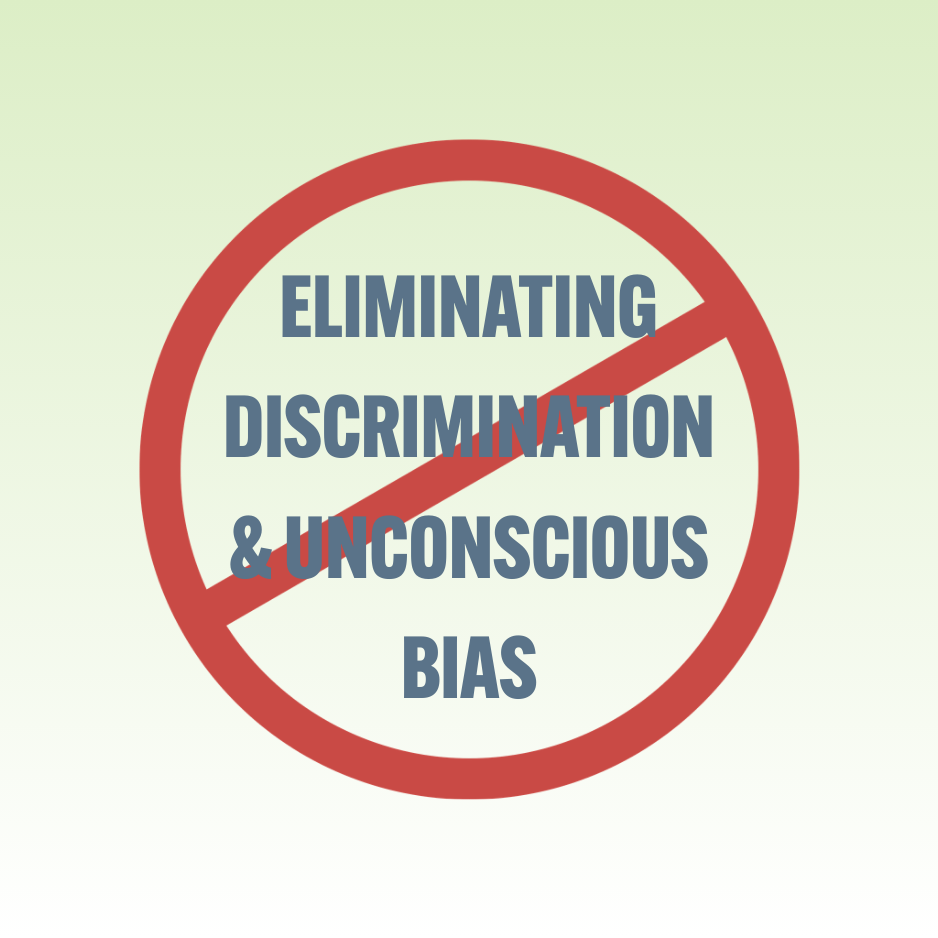
This article looks at discrimination, covered in The Equality Act, and unconscious bias, a likely cause of discrimination.
Discrimination
Discrimination means treating someone ‘less favourably’ than someone else based on one of the 9 protected characteristics:
- Age
- Disability
- Gender Reassignment
- Marriage and Civil partnership
- Pregnancy and Maternity
- Race
- Religion or Belief
- Sex
- Sexual Orientation
In alignment with the Equality Act 2010, any form negative discrimination in the work place is illegal.
Discrimination: Objective Justification
Objective justification – when an employer can prove a proportionate and legitimate need for a specific role to either require/or not require a protected characteristic.
The rules behind it in a nutshell are:
- Limited Discrimination Allowed: The Equality Act permits discrimination based on a protected characteristic only if there’s a genuine occupational requirement (GOR).
- GOR Applies to All Employment Aspects: This can include recruitment, training, promotion, benefits, and dismissal.
- Employer Justification: The employer must prove the GOR is:
- Objectively justifiable.
- Related to the specific role.
- A proportionate means of achieving a legitimate aim.
- Example: Rejecting a male applicant for a women’s clothing store assistant role involving undressed customer contact.
- Legitimate Aims for GOR: Examples include:
- Protecting customer interests (privacy, decency).
- Authenticity in dramatic performances or modelling.
- Providing personal welfare services effectively.
Discrimination: Positive Action
You can do something voluntarily to help people with a protected characteristic. This is called ‘positive action’. Taking positive action is legal if people with a protected characteristic:
- are at a disadvantage
- have particular needs
- are under-represented in an activity or type of work
For more information visit – https://www.rec.uk.com/our-view/insights/legal-news-and-views/discrimination-and-unconscious-bias-recruitment
Discrimination: How we can help
Given the complexity and high legal scrutiny of the exemptions outlined above, working with a professional recruitment agency can be a critical strategy for employers seeking to ensure compliance with the Equality Act 2010.
- We have the expertise to deal with these complexities
- Neutral screening and unconscious bias management (read our article on this)
- Job description compliance
Understanding Unconscious Bias: The Silent Driver of Discrimination
Below are some of the most common types of unconscious bias that can arise within the hiring process*:
- Gender Bias – Having more or less favourable views about an individual based on their gender.
- Ageism – Discriminating against someone based on their age.
- Attribution Bias – The tendency to explain a person’s behaviour with their character rather than any situational factor.
- Confirmation Bias – Trying to confirm something based on a pre-conceived notion.
- Halo Effect/ Horn Effect – Overly focusing on the perceived positive (halo effect) or negative (horn effect) of a candidate.
- Affinity Bias – Favouritism based on shared characteristics.
- Intuition – Only trusting your gut.
- Culture fit – Tendency to value cultural fit over behavioural fit.
By being aware that you might have some unconscious biases is the first step. From understanding this you can then create an effective management strategy to ensure you reduce as much bias from your hiring process.
Bias: How can you manage it?
- Review your job description
When crafting your job description use inclusive language and try the “flip test” to gauge whether your personal experience or unconscious bias has impacted word choice.
- Use more than one job site to promote your vacancy.
This will help increase the chances of finding candidates from different backgrounds.
- Blind CV Review
Removing personally identifying information from a CV allows for an objective evaluation of the candidate’s skills and qualifications.
- Recorded Interviews
Recordings allow for the interview to be reviewed multiple times, and even by different people, which can help to level out individual biases. Additionally, recordings provide an accurate and complete record of everything that was said. This reduces the chance of misremembering or misinterpreting what was said.
- Structured Interviewing
Ask each candidate the same set of questions and in the same order. This will give each candidate equal opportunity to effectively share their story and showcase their fit for the role.
- Structured Feedback
By using the same formats, rating scales, and rubrics for everyone, it creates a “shared standard” that applies equally to all candidates. This eliminates the variability that allows individual biases to influence outcomes.
- Education
Education reduces implicit bias by helping us become more aware of our behaviour and how we think about others based on race, gender, or other factors.
Bias: Can AI eliminate it?
AI is not a neutral, magic wand that erases human prejudice.
To leverage its potential to reduce bias, AI must be paired with conscious human intervention and ethical design. Companies must be willing to:
- Clean and balance their training data to remove historical biases.
- Continuously test the algorithm to ensure it is not using proxy variables.
- Audit the results manually to ensure fairness across all demographic groups.
When used responsibly, AI can help organisations identify and correct systematic biases they never knew they had, leading to fairer and more equitable recruitment process.
Bias: How can we help?
Partnering with us, your local recruitment experts, could be an additional step in your bias management strategy.
- We are experts at writing inclusive job descriptions. We do this every day.
- We always post vacancies across a range of job sites.
- We have a standardised interview process and will use your criteria to determine the role fit.
- We are available to answer any questions you may have regarding this.
Other helpful sites:
- https://ico.org.uk/for-organisations/uk-gdpr-guidance-and-resources/artificial-intelligence/guidance-on-ai-and-data-protection/how-do-we-ensure-fairness-in-ai/what-about-fairness-bias-and-discrimination/#:~:text=Bias%20is%20an%20aspect%20of,of%20one%20solution%20over%20another.
- * https://peoplemanagingpeople.com/recruitment/bias-in-hiring/#strategies-to-reduce-bias
- https://mailchi.mp/e307358a40a6/sw13pe54oq