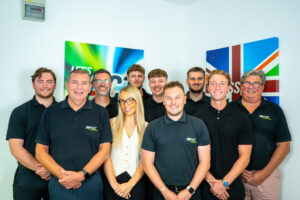

The regional headlines might look cautious, but at Impact Recruitment, we’re telling a very different story.
The latest KPMG and REC UK Report on Jobs for the Midlands (March 2026) makes for mixed reading at first glance. Permanent placements fell at their sharpest rate in five months, and the Midlands recorded the steepest decline of any English region in both permanent and temporary vacancies. Meanwhile, the ONS’s national picture adds further context: UK unemployment rose to 5.2% in the period November 2025 to January 2026, up on both the previous quarter and a year ago, while payrolled employees fell by 96,000 over the year to January 2026.
On paper, that sounds like a market in retreat. But here’s the thing: data tells one story. The ground tells another.
What the Reports Say
The March KPMG/REC data reflects a broad picture of caution across the Midlands. Businesses are weighing rising costs and economic uncertainty against longer-term hiring decisions. Permanent placements have fallen for two consecutive months, and candidate availability is rising, largely fuelled by redundancies feeding into the labour pool, creating more competition for jobseekers across many sectors.
At a national level, UK vacancies sat at an estimated 721,000 in the December 2025 to February 2026 period, broadly flat but edging slightly lower. And while wages are technically still rising, annual growth in average earnings was 3.9% including bonuses for November 2025 to January 2026 (the softest increase since November 2020) with private sector earnings growing at just 3.3%. In real terms, once inflation is factored in, that growth is minimal.
The one genuine bright spot in the Midlands report was temporary billings, which surged to an index of 57.8 – the second-fastest rate of expansion since May 2022. The Midlands was the only English region to register growth in temp billings, now running for eight consecutive months. Across commercial, industrial, and supply chain roles in particular, many employers are choosing flexible staffing while the longer-term outlook settles.
What We’re Seeing at Impact Recruitment
Here’s where we diverge sharply from the regional narrative.
Across our four specialist areas (commercial, industrial, supply chain, and technical & engineering) the picture is one of genuine, sustained activity. February 2026 marked our highest volume of permanent placements since 2022, and March has continued strongly. Early signs from April and May suggest that momentum is not just holding, it’s building.
Our technical & engineering desk remains exceptionally busy. The KPMG/REC report itself flags engineers and specialist engineering roles as being in short supply across the Midlands for both permanent and temporary positions, and that reflects exactly what we’re seeing. Skilled candidates in these disciplines are being placed quickly, and clients who hesitate are losing people to competitors.
In industrial and supply chain, demand for experienced operators, production staff, warehouse operatives, and logistics professionals continues to run ahead of available talent. The report notes forklift drivers, warehouse operatives, production, and manufacturing roles among the skills hardest to fill for temporary positions – all core to what we do. Redundancies elsewhere in the economy are adding bodies to the candidate pool, but not necessarily the right bodies.
On the commercial side, we’re seeing consistent demand for office-based roles – again reflected in the report, which lists accountants, credit controllers, payroll, and administrative professionals among the most sought-after permanent candidates in the Midlands.
The Talent Shortage Is Real and Structural
With candidate availability rising nationally, it might seem like now is a good time to be selective. But across our sectors, that assumption doesn’t hold.
Economic inactivity has been falling, down in the latest quarter and below estimates from a year ago, which suggests more people are returning to the workforce. But for specialist technical, engineering, and supply chain roles, the skills gap is structural. It predates the current economic uncertainty, and no degree of market softness will close it overnight. The candidates entering the pool due to broader redundancies are largely coming from other sectors. They don’t automatically translate into the talent our clients need.
If you’re hiring across technical, industrial, or supply chain disciplines in the Midlands right now, the market is working against you waiting.
A Word on Pay
Starting salary inflation across the Midlands has slowed to its weakest point in over five years – that’s the broad picture.
For permanent hires in technical and engineering disciplines specifically, competitive offers remain essential. Demand for senior and specialist roles continues to exert upward pressure on starting salaries in these areas even as the overall index softens.
Temporary hourly wages are still rising, up for the fourth consecutive month, driven primarily by cost-of-living pressures. For clients using flexible or contract resource across industrial and supply chain roles, this is worth factoring into workforce planning for the rest of Q2.
Our Operations Manager, Matthew Hopson, recently spoke around the National Living Wage rises and the more complicated story about compression, retention, and the true cost of keeping pace.
Matthew shared “Whilst technically wages haven’t fallen behind inflation, you could argue that for the people working at shop floor level in warehouse logistics, wages have fallen behind the inflationary pressure everybody is under.”
For employers, this creates a difficult dynamic. You’re paying more, your employment costs have risen, and yet your workforce still feels the squeeze. That disconnect matters because it affects motivation, loyalty, and ultimately, retention.
Looking Ahead
The REC’s Chief Executive noted that despite global uncertainty creating some headwinds in March, the job market showed resilience, and that confidence will be the defining factor in whether short-term activity converts into sustained hiring through the rest of 2026.
At Impact Recruitment, we’re already seeing that confidence translate into action. Spring 2026 is shaping up to be one of our strongest periods in recent memory across commercial, industrial, supply chain, and technical & engineering. If you’re planning hires for Q2 and beyond, the time to move is now.
Get in touch with the team to discuss your hiring plans.
Data sourced from the KPMG and REC, UK Report on Jobs: Midlands (March 2026), compiled by S&P Global, and the ONS Labour Market Overview UK: March 2026.